








RECOMMENDED READING
For the past five decades, as private sector union membership in the US collapsed, the National Labor Relations Act went unchanged. Labour leaders funded the Democratic Party and made maximalist demands often unpopular with workers themselves. The Republican Party, largely beholden to business interests, was content to oppose any reform and let worker power wither.
Now, however, a small but growing cadre of pro-worker conservatives is scrambling that playing field, most recently with the passage on Tuesday of the landmark Faster Labor Contracts Act (FLCA) in the House of Representatives. Seventeen of them co-sponsored the bill and seven joined with Democrats to force a vote over the opposition of their own leader, Speaker Mike Johnson. In the final tally, 20 Republicans voted to strengthen substantially the position of workers seeking a union contract. People often assume that the vote on whether to form a union is the make-or-break moment in securing the right to bargain collectively. In fact, a successful union election merely marks the start of negotiations that might go nowhere. Most workers, a year after forming their union, still don’t have an agreement. Employers use stalling tactics to sap momentum and undermine workers’ enthusiasm for the process.
Recommended Reading

Talkin’ (Policy) Shop: Worker Voice
On this episode, Oren and Chris discuss the issue of worker voice and how to reform labor law to create new avenues for labor input from the shop floor to the boardroom.

The Conservative Case for Organized Labor
Eric Levitz interviews American Compass’s Oren Cass about his vision for a pro-worker conservatism.
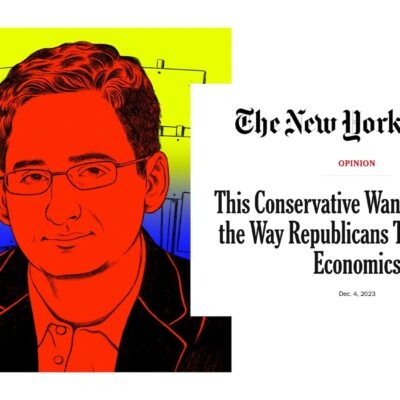
This Conservative Wants to Change the Way Republicans Think About Economics
In an extended New York Times interview, Oren Cass discusses the importance of labor to conservative economics.
