


AEI’s Michael Strain on Projects Like Ours
On the most recent episode of Jonah Goldberg’s podcast, The Remnant, AEI director of economic policy studies Michael Strain delivers a harsh assessment of projects like American Compass.


On the most recent episode of Jonah Goldberg’s podcast, The Remnant, AEI director of economic policy studies Michael Strain delivers a harsh assessment of projects like American Compass.

The Chinese Communist Party’s efforts to eradicate the Uighur Muslim population in favor of the Han majority are horrifying. Programmatic abortions and sterilizations, slave labor, and “re-education” camps recall atrocities of the past. At the same time, the CCP’s ambitions for Hong Kong outrage westerners committed to liberty and the rule of law. And its record for the treatment of prisoners and religious dissidents is miserable.

Not without reason do China critics tend to observe a rival across the Pacific strong everywhere the US is weak, especially under the sway of coronavirus. For most on the Right, the focus of such criticism centers around ideology: if only the Chinese weren’t communist, we wouldn’t find ourselves in this mess. Some anti-communists take a more globalist bent (“true capitalistic democratization hasn’t been tried”), others a more nationalist one (“America must once again defeat an evil empire”).
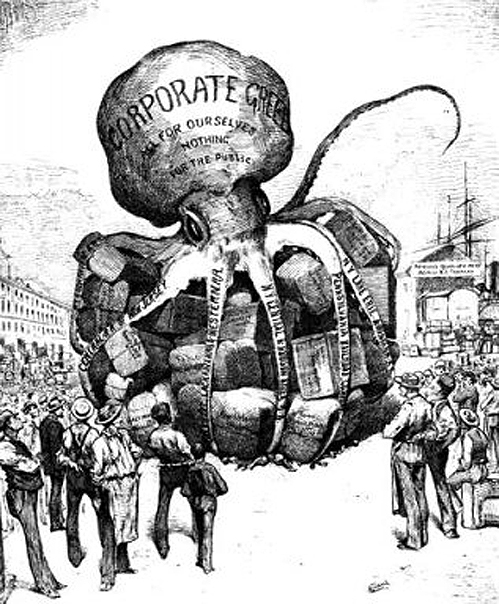
Over the last several decades a major shift has occurred in how many U.S. elites – pundits, advocates, policy makers, and others – think and talk about corporations. For much of the 20th century most elites viewed corporations as an institutional tool by which America could best achieve its most important economic goals: innovation and increasing living standards. To be sure, there would always the occasional Enron or Tyco scofflaw, but these were seen as the exception, to be prosecuted and shunned.

A new poll of Michigan voters by Robert Calahy’s Trafalgar Group indicates a tight race. What explains the other polls that show Biden ahead by a wide margin? Calahy points to “social desirability bias.” Put simply, people don’t want to admit to socially stigmatized views, and thus won’t admit they are willing to vote for Trump. Calahy thinks this effect is greater today than it was in 2016.

At the beginning of a lane of public housing units pink balloons mark the mailbox and a disposable tablecloth flutters in the wind, held down on a plastic table by a box of sprinkled cupcakes with high-topped icing and another box of assorted party favors.

“I will not live in the pod.” This commonplace rallying cry among younger Right-aligned people on social media is approaching the status of a credal opening statement.

The current debates over cancel culture are odd because few involved in them have been canceled, or risk being canceled, while entire institutions are indeed being canceled. Institutions that serve and amplify the interests of the working class, such as local newspapers, unions, and churches.

American Compass’s Oren Cass debates University of Chicago professor Todd Henderson over the question, “Does the private equity industry create substantial social value?”

From my ten years documenting the poverty, pain, and frustration of lower-income communities it is easy to conclude that the American Dream is dead for the working class. There is one big exception though: Newer immigrants, who despite poverty, are still optimistic.
With surging COVID-19 cases in many parts of the country and a widely available vaccine months away—and with consumer and investor confidence and spending likely to be weak even with a vaccine—the odds are quite high that economic recovery will be long, drawn-out, and weak. As such, Congress is rightly debating a fifth economic recovery package.
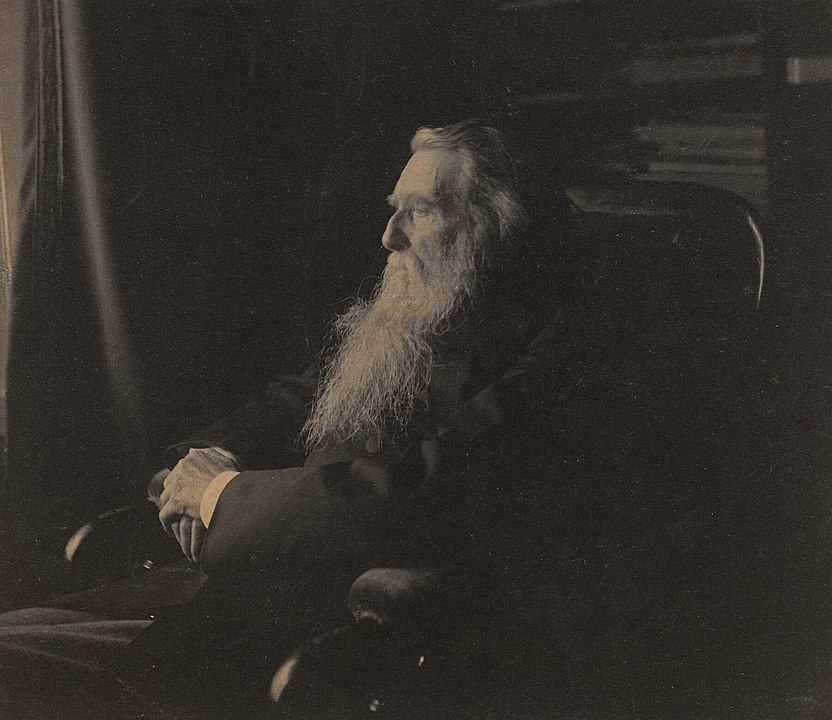
As we seek a realignment in American political economy we would do well to rediscover the thought of a 19th-century critic who did not like us very much. John Ruskin (1819–1900) found Americans obsessed with a liberty he considered license and naively committed to an ideal of equality he believed impossible: “also, as a nation, they are wholly undesirous of Rest, and incapable of it.” In her utilitarian preoccupation with commercial ventures, America had inherited Montaigne’s English vice of inquietude and seemed unlikely to recover.

In his latest contribution to our ongoing debate over social insurance and conservatism, Oren Cass clarifies some of our points of disagreement. One of them concerns the meaning and nature of “social insurance” itself. Another is whether certain proposals are sufficiently “conservative.”

The debate about Big Tech often breaks down into one of whether or not a private company should be “regulated.” This is especially true as attention heats up around the use of antitrust enforcement — substantively, definitionally, and applicably different than regulation, though in argument one side attempts to conflate them.

It’s more nuanced than you think.

The partisan rancor in Washington is worse than any time in the last century. But surprisingly when it comes to economic policy, both parties share a common view: policy needn’t be concerned about enterprise capabilities.

Recent posts from Sam Hammond , Ed Dolan, and Oren Cass, have opened a very thoughtful debate on the role of redistribution in a future economic agenda. They rightly observe the corrosive effects of mindlessly expanding redistributive policies without addressing many of the flaws in our current system that give rise to the need for such redistribution in the first place.

Redistribution is a vital topic for conservatives as we question stale orthodoxies and reexamine how first principles can help to address modern challenges. In this respect I agree entirely with Read more…

A 2020 presidential contender unveiled a 700 billion dollar ‘Buy American’ plan today to rebuild America’s manufacturing sector devastated by the coronavirus.

In a recent essay for The American Conservative, Oren Cass criticizes a viewpoint, which he attributes to the Niskanen Center, among others on the center-right, that places a central emphasis on free markets and economic growth even when doing so “necessitate[s] a much larger safety net, widespread government dependence, and the loss of a baseline expectation that people everywhere can become productive contributors to their communities and form stable families capable of self-reliance.”

Join our mailing list to receive our latest research, news, and commentary.
Subscribe to receive updates, previews, and more.