





Returns Counter Methodology
Sources and methodology for the Coin-Flip Capitalism Returns Counter.


Sources and methodology for the Coin-Flip Capitalism Returns Counter.
This seems like a strange headline given that the economy has recently shed almost 40 million jobs. But at some point with the development of a vaccine or an effective treatment, the economy will come back to normal.
Try as we might, those of us who dare to challenge economic orthodoxy within the GOP are unlikely to prevail on policy and moral grounds alone. But the politics of today offer us another course that is just as powerful: offering a prescription to protect from impending electoral doom of the party if the course isn’t corrected. Rejecting economic orthodoxy within the GOP and embracing the largest jobs program in American history may be the only antidote to saving the Senate majority and the Trump presidency.

In his recent post Matt Stoller observes that a common theme at The Commons thus far is “the reemergence of the state as the key locus of legitimacy for the exercise of power” and urges conservatives to think about corruption and statecraft. What’s needed, he says, “is a vision of how to structure such a state without succumbing to corruption.”
Some time after I first met Oren, we had a good back and forth about neoliberalism, a term that has already appeared several times on this website and is at the forefront of American Compass’s mind. While Oren thought the word useful to describe the reigning economic orthodoxy we both found dissatisfying, I was more reticent to use it.
Professor Dan Drezner has been crudely criticizing Senator Josh Hawley’s New York Times op-ed on U.S. withdrawal from the WTO—treating it “the way one would treat an undergrad paper in global political economy,” awarding a C-minus, and offering the feedback that, “You can do better work than this, Josh. Put in the effort, do more research and make sharper arguments next time.” He exposes the fundamental weakness of his critique though, with the claim that “Hawley prefers exiting the WTO and rejecting the estimated $2.1 trillion in benefits from trade,” in the process demonstrating exactly what simplistic economic analyses of trade policy get wrong.
Japan has announced newly defined restrictions on foreign investment, which at face value, seem to violate the provisions of the World Trade Organization agreement.
This paragraph was penned by G.K. Chesterton in 1925 about William Cobbett, 1763-1835.
American Compass launched in early May to widespread media coverage and generous praise from politicians, scholars, and commentators.
Henry Adams described the hopelessness in Washington in 1860 and early 1861 as the country careened towards break-up and war this way: “No one could help. Looking back on this moment of crisis, nearly 50 years afterwards, one could only shake one’s white beard in silent horror.”
Before we were engulfed by coronavirus panic, Bill McGurn penned a column warning against the perils of American Compass and social engineering (“And Now a Word for Laissez-Faire,” Wall Street Journal, March 7).
Daniel Moynihan once stated that “Everyone is entitled to his own opinion, but not his own facts.” This is no more true than with today’s debate over the health of U.S. manufacturing; a debate that is critical to get right if policy makers are to respond appropriately.

Debates over family policy are centering on the idea that households should be “paid” for raising children.
Matt poses some important questions below about how conservatives must defend anti-corruption statecraft against (tellingly) American libertarians and Chinese communists. I think it is right to suggest that the founders and their generation generally shared a robust sensibility that opposing, combating, and defeating corruption was properly political activity at the regime level.
Oren Cass invited me to contribute to this site not as a conservative but as a lefty and Democrat who is fascinated by the project of intellectual revival in which this network of thinkers is engaged.
City Journal contributing editor Chris Rufo spotlights American Compass’s leading role in challenging the orthodoxy of “growth for growth’s sake.”
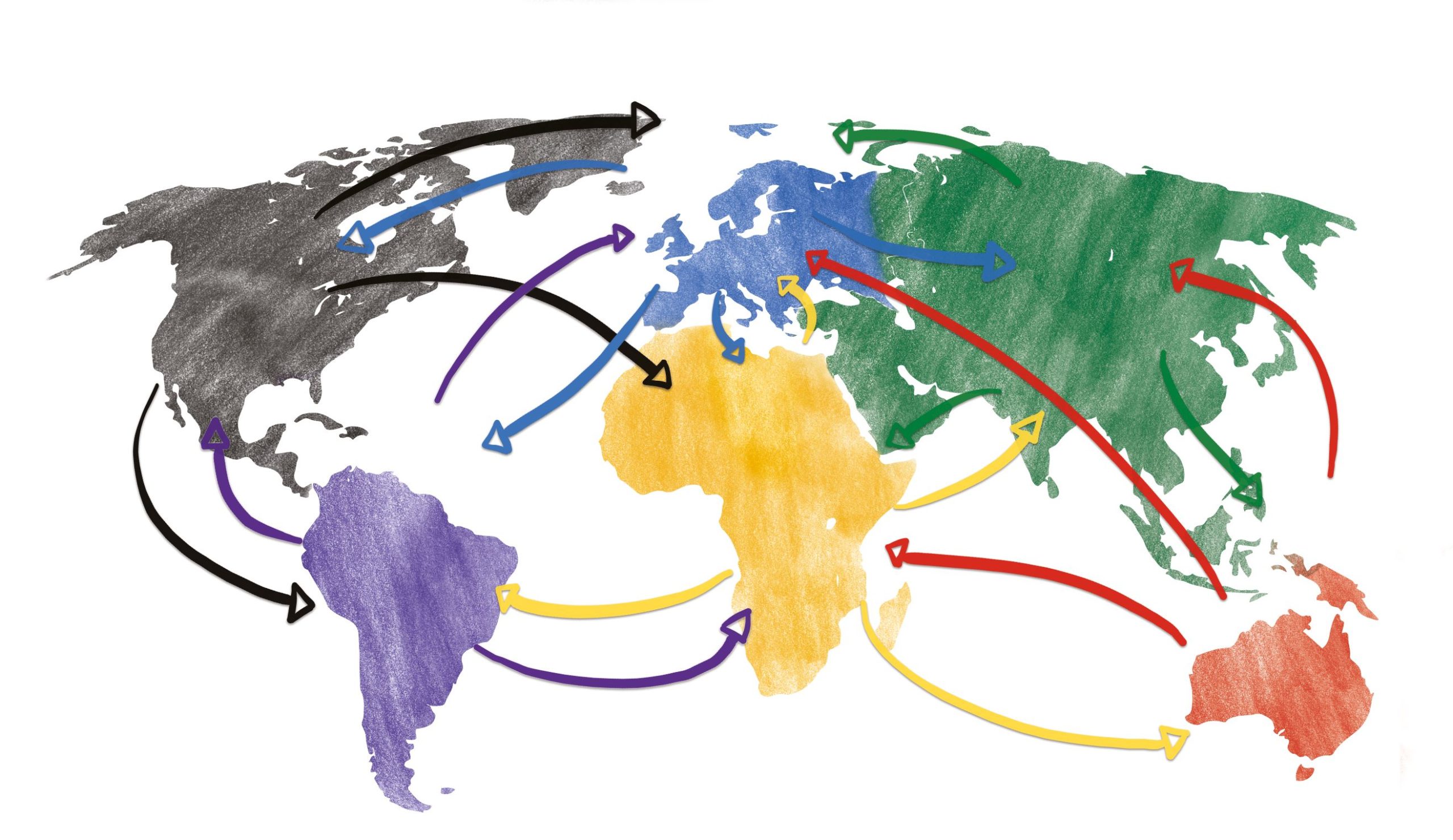
It is refreshing to see an increasing number of politicians and pundits from across the political spectrum calling for re-establishing their manufacturing base to address the vulnerabilities exposed in the wake of COVID-19. The latest is GOP Senator Josh Hawley, calling for the abolition of the World Trade Organization, in a NY Times Op-ed.
American Compass’s Oren Cass discusses the next round of GOP proposals to address the coronavirus pandemic.
American Compass’s Wells King outlines his arguments from his essay on “Rediscovering a Genuine American System” in this adaption.
The Senate is finally back in Washington and negotiations over the next coronavirus recovery package are underway. The White House’s initial salvo was reported Monday and includes a capital gains tax cut, a measure to increase entertainment tax deductions, and a payroll tax cut.

Join our mailing list to receive our latest research, news, and commentary.
Subscribe to receive updates, previews, and more.