



Getting medieval to protect workers in the AI era
As we consider the transformative effects that artificial intelligence is likely to bring about in life and labor, it is critical for us to think of the worker as something more than just a tragic figure. We must expect the laborer to exercise agency, charting a course that protects their autonomy and prosperity through the buffeting winds of technological change. In this sense, the “future of work” should be seen as a kind of two-player, iterated game, with the ever-escalating capabilities of machines confronting creative attempts to overcome, manipulate, and subvert the pressures that will be placed on the economy.
Perhaps the most obvious lever to be pulled by the worker is obscurity. For all of its impressive capacities, artificial intelligence requires data in order to build its proficiency against a target task. To become a better lawyer, these systems require access to briefs, drafts, and statutes. To become a better carpenter, these systems require telemetry from tools, the physical movements of the craftsman, and granular data about materials. For many jobs, some of this data resides in legible materials—documents, training materials, and worksite recordings—but much of it resides in a tacit, unrecorded form. The practiced litigator knows in their bones the foibles of a familiar judge as much as the veteran carpenter knows the idiosyncrasies of their equipment.
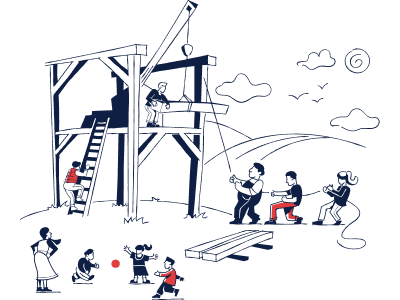
This provides a natural and powerful way of limiting the intrusion of artificial intelligence into a job: Hide documentation, obfuscate processes, and only expose critical information to other trusted practitioners. By locking the knowledge away, workers might engage in their own “pacing,” limiting the effectiveness of artificial intelligence on their own economically valuable tasks. They could build a guild.
Not all professions will find themselves equally guildworthy. Professions whose practices are already highly legible will face nearly insurmountable hurdles to making this data hard for machines to access and learn from. Professions with many members will be faced with problems in controlling defectors who would sell their knowledge as training data. Professions that have rushed to integrate artificial intelligence will find themselves already exposing vital tacit knowledge to frontier labs that will rapidly improve their systems against their usage.
But it seems wrong to believe that all workers everywhere will be unable to organize themselves fast enough to lock down access to their know-how from the prying eyes of the machines. In this critical window where the capabilities of artificial intelligence remain uneven, a few nimble professions may be able to secure a long-term moat against machine competition by establishing strong new norms, limiting digitization of their knowledge, and erecting new legal barriers. We will see new guilds.
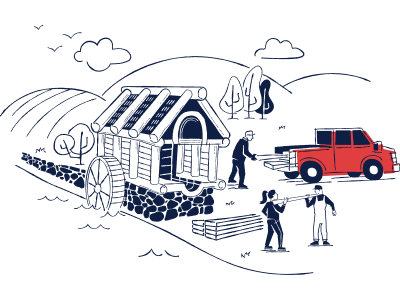
The choice of the word “guild” is quite deliberate, since the kind of worker organization robust against the pressures of extremely capable artificial intelligence would look much more medieval than the familiar twentieth-century labor union.
Intense secrecy would be paramount. Frontier systems are increasingly good at “few-shot” learning, achieving proficiency at a task with less and less training data and fewer examples. This means that the impact of even small leaks of information from the guild could be catastrophic for its economic position. One might imagine years-long apprenticeships to allow a practitioner to enter a circle of trust, the careful storage of key knowledge only on hard-to-access physical media, and code language meant to mislead and confuse.
The modern guild might come to wield an unusual level of political power in the “post-AGI” world. A nation that harbors successful guilds would be able to provide the rare, valuable goods and services that remain hard for other nations to replicate with artificial intelligence. Guilds might also represent a rare and stable form of elite employment in a chaotic economy otherwise thrown into tumult by technology. In both cases, the guild would find itself with the leverage to demand special legal privileges and prerogatives like the guilds of old.
This thought experiment leaves open a range of questions worth exploring as policymakers consider the future of work. For one, what professions are well positioned to transform defensively into these types of guild structures? How might they go about doing so? Are certain countries better able to achieve guild density by dint of their existing economic position and the legibility of the skills of their workers? Should there be an industrial policy that facilitates guild formation and the expansion of secret, illegible knowledge? Why or why not?