






Making AI work for Americans means ensuring more work for Americans
Building an economy that produces more of what it consumes, relies less on foreign labor, and pays workers higher wages will require substantially faster growth in labor productivity, with AI and related technologies (especially those integrated into physical production processes) poised to play a critical role. At the same time, policies that encourage domestic production and restrict access to lower-cost foreign labor could accelerate the development and adoption of such technologies. The result could be a virtuous cycle in which a bounded market spurs technological innovation, and technological innovation makes a high-wage domestic economy more viable.
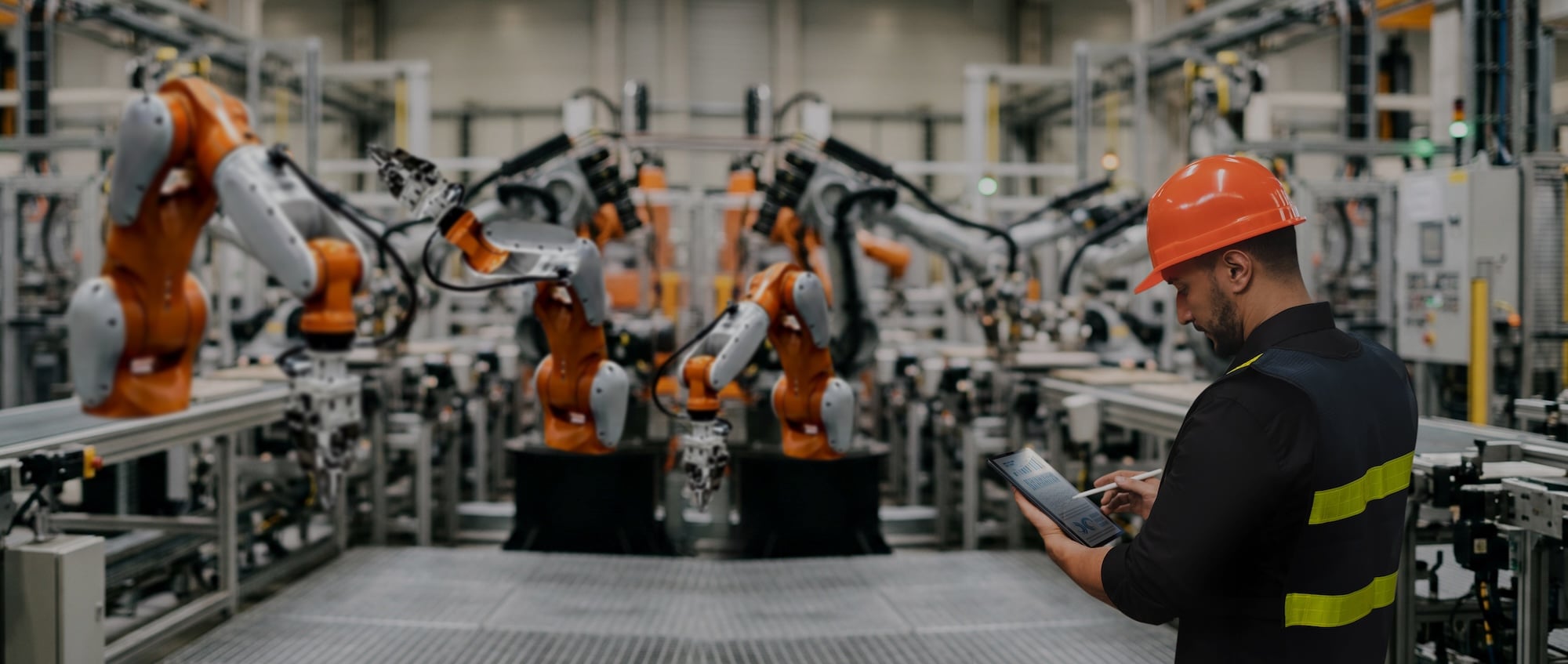
For much of the past half-century, policymakers have privileged credentialed knowledge work over the technical and practical expertise required in the physical economy. AI could unsettle this hierarchy, commoditizing certain forms of expertise in the world of bits while, at the same time, augmenting workers whose skills depend on presence and judgment in the world of atoms. A machinist equipped with AI-assisted tools, for example, can assume greater responsibility for production and perform more sophisticated work. Likewise, a grower of specialty crops deploying AI-guided harvesting robots could reduce reliance on seasonal foreign labor while increasing demand for skilled American technicians to operate and maintain the equipment. Realizing these opportunities at scale will depend on whether public policy encourages firms to invest in domestic production and workers.
The thesis of the “bounded market” holds that capital and labor should remain mutually dependent in the domestic economy. Thus, higher trade barriers make domestic production more attractive by reducing the cost advantage of producing abroad. Industrial policy reinforces incentives to invest in the United States and manufacture goods at home. More restrictive immigration policies, including stronger enforcement and limitations on temporary work visas, constrain firms’ access to lower-cost foreign workers in the U.S. labor market. These policies strengthen firms’ incentives to invest in the productivity of American workers and position American workers to share in the resulting gains. As the workforce ages, demographic pressure will compound policy-induced pressure, further incentivizing the private sector to invest in technologies that enhance worker productivity.
But the dynamic runs both ways. Just as pressure on the workforce incentivizes investment in technology, advances in AI and robotics that make American workers more productive can in turn make domestic production competitive in industries where American labor costs were once considered prohibitive. Of course, faster labor productivity growth does not alone guarantee higher wages or ensure that workers share in the gains; other arrangements will be necessary. But technological progress alone will not deliver a more self-reliant, high-wage American economy; that will also require a bounded market that rewards investment in domestic production and American workers.

