





What Now? A Conversation On Where Conservatives Go After the Trump Presidency
American Compass’s Oren Cass, WSJ’s Gerald F. Seib, and author George F. Will discuss the future of the conservative movement, co-hosted with the Wall Street Journal.


American Compass’s Oren Cass, WSJ’s Gerald F. Seib, and author George F. Will discuss the future of the conservative movement, co-hosted with the Wall Street Journal.

The American Revolution was in many ways inspired by the scientific one. But this says at least as much about science as it does about America—and as vaccine-related controversies renew calls to “listen to scientists,” it’s worth considering how the philosophy of science parallels the philosophy of the Founders, and what those parallels suggest about the nature of scientific authority.

n a recent post about the relationship between family trends and the skills gap I noted that for some of the young adults my husband David and I interviewed in southwestern Ohio, trauma and addiction make it difficult to take advantage of the employment opportunities that do exist.

In popular parlance an “apocalypse” means an epic disaster. As a simple transliteration of Greek (apocalypsis) the literal meaning is more pedestrian: “uncovering,” or to use a fancier word, “revelation.” But one understands the popular sense, for it is often unsettling (or worse) when the true nature of things is revealed. This is the case in last book of the New Testament, which bears the name Apocalypse.
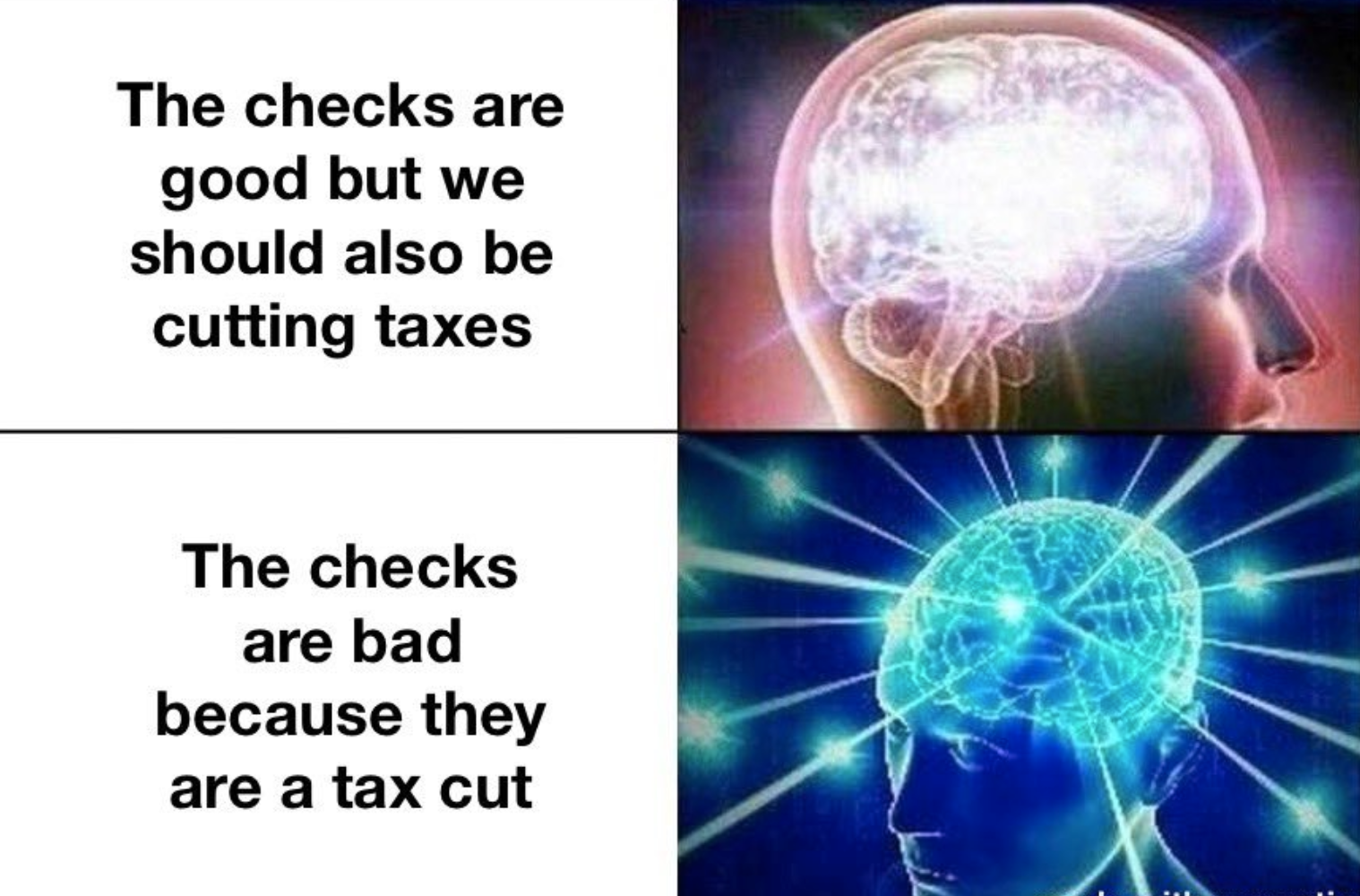
“Checks” risks becoming the rallying cry for a hollow form of populism, one that seeks to merely extract value for the masses rather than build something new and permanent.
American Compass’s Oren Cass makes the case against forgiving billions of dollars of student debt and for rethinking our approach to higher education.

After a half century of neoclassical economics dominance, it has become a truism among most economists and policy makers that a nation’s sectoral composition doesn’t matter.

There can be no doubt that Trump gave the press the back of his hand. His refusal to kowtow to upscale media brands offended the vanity of high-level reporters, editors, and talking heads on TV. That need not have disrupted the political-ideological ecosystem. But Trump has had structural implications. He exploded the established relations of Read more…
A strange development of recent years has been the revival on parts of the left and the right of the long-dormant ideology of antimonopolism, once associated with agrarian populists like William Jennings Bryan and progressives like Louis Brandeis.
American Compass’s Oren Cass discusses the tension between worker power and loose immigration policy.

“Populism” is a term that since the modern era has been generally trotted out to mean a political attitude that reflects widespread anger and resentment against powerful elites, while among stenographers for the power class, populism has been reflexively trotted out to warn against the passions and wants of the mob.
Senator Marco Rubio and Congressman Anthony Gonzalez join American Compass executive director Oren Cass for a conversation about how to build a conservative agenda that appeals to a multi-ethnic, working-class base.
American Compass’s Oren Cass joins the Quillette podcast to discuss the conservative future for the labor movement.

In a recent conversation hosted by American Compass, “What Next: A Multi-Ethnic, Working-Class Conservatism,” Ohio Congressman Anthony Gonzalez discussed the skills gap. “[T]he number one issue that I hear from employers is, I have jobs, I could hire 10 people tomorrow, but either the folks don’t want to do the work that we have, or I just can’t find the right people.”
In its first year, American Compass is already recognized as the flagship for a healthier and more responsive post-Trump conservative movement, underscoring not only the void’s size and importance but our effectiveness in filling it.

In his 2020 Founder’s Letter, Oren Cass describes the timeless principles and creative energies of conservatism that are vital to America’s prospects for adaptation and renewal.

Postliberalism and pornography are independently controversial subjects—so perhaps I should have thought twice before conjoining them in a semi-snarky, slightly ambiguous tweet, which sparked a number of strong reactions:

A funny thing happened in the days after we published “What Happened: The Trump Presidency in Review.” The collection’s emphasis on the success of economic policies that pushed the labor market toward full employment attracted substantial interest from proponents of looser fiscal and monetary policy. But that “strange new respect” came with the mandatory caveat that we were still wrong to suggest increased immigration enforcement and a slower inflow of new workers might be part of the same package.

American Compass’s work on corporate responsibility and labor reforms is highlighted as a key example of the growth a bipartisan consensus on the obligations of businesses.

A few years ago, the Information Technology and Innovation Foundation (ITIF, the tech policy think tank I lead) surveyed several hundred DC policy folks to find out, among other things, what they thought ITIF’s political orientation was. About 40 percent said we were moderate, a third said we were conservative, and a quarter said we were liberal. Assuming the latter two groups weren’t clueless, it reinforced to me that on economic policy, the old conservative-liberal lines are anachronistic.

Join our mailing list to receive our latest research, news, and commentary.
Subscribe to receive updates, previews, and more.